


Education
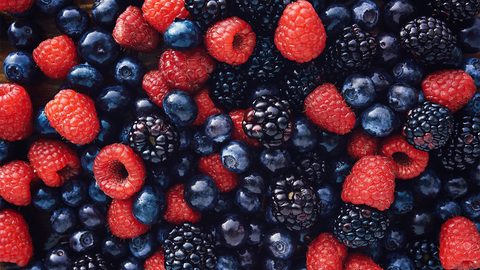
It seems these days that we see the word 'antioxidant' everywhere, especially when it comes to food advertising. More and more brands are labelling their products 'antioxidant-rich,' as though that were universally understood. The funny thing is that unless we have a background in medicine or nutrition, we may only vaguely understand that antioxidants are a good thing. So the question remains: what's behind the antioxidant hype? As it turns out, antioxidants really are a big deal, and having enough of them can be critical for our health. The reason for this is because antioxidants protect us from a chemical process that is at the root of many health issues. On the flip side, getting enough antioxidants can help us stay looking good and feeling good. Today we take a close look at antioxidants--what they are, why they matter, and some practical ways that you can get enough of them in your diet.

Many of us don’t realize how much we rely on our joints every day for simple tasks. Your joints are responsible for every conceivable action in the body, and our quality of life depends to a great extent on how well (and painlessly) our joints function.
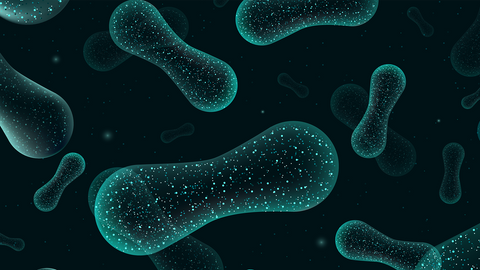
Does your head feel foggy? Do you wake up inexplicably tired? Do you struggle with mood imbalance for seemingly no real reason? The root cause may be in a place you'd never think to look: the gut. You might be thinking, "Isn't all of this a brain issue?" It certainly is, but scientists are becoming more and more convinced that there is an incredibly complex connection between your gut and your brain. In other words, if something is off with your gut health, it can actually affect how well your brain functions.

Do you find yourself texting in the middle of a conversation? Do you catch yourself glancing at the GPS while navigating through traffic? If so, then you may be multitasking more than you think. In fact, if you own a smartphone at all, then you could be multitasking continuously without realizing it. A Business Insider article reported that we touch our phones on average 2,617 times a day (source.) A significant amount of that tapping and swiping is spent while doing other things.

When you imagine your life at 90 years old, how do you see yourself? Do you envision sitting in a rocking chair watching television, or do you see yourself running foot races, climbing trees, and dancing? You might think it’s a strange question. Who in the world is that healthy when they’re 90 or 100 years old?

If you deal with frequent migraines or headaches, then you know that finding relief isn’t always a simple fix. While over-the-counter products like aspirin can help relieve pain in some cases, they don’t always work and taking them too often can create problems in and of itself.

If you’re struggling with cognitive issues, your first instinct is probably not to think about your gut health. However, as more scientific research unfolds, experts are finding that your digestion could play a major role in determining how well your brain functions.
Scientists refer to this as the “gut-brain” connection, or “gut-brain axis.” While this a cutting-edge area of study, the research coming forward shows a connection between the two that is more complex and amazing than we ever realized. In this brief article, we’ll look at how the two are connected and what you can do to maintain your gut health for optimal brain function.

If you’re a newbie to the subject of probiotics, you may be wondering where to start. Visiting the probiotic section of a health food store can be a daunting task, and you will likely find an entire wall (and cooler) full of different options. Often we hear about probiotics as though it were one type of bacteria. In reality, there are myriads of bacterial strains, and telling them apart can be a challenge. What’s more, some types of probiotic strains can be more or less beneficial for certain people.

I think we would all agree that it has been a challenging and crazy year. What better time than now to reevaluate our schedule and to start working on healthier habits.
Many of us need a total transformation, but too many drastic lifestyle changes at once usually isn’t the recipe for long term success. Start small: pick one tiny health habit at a time, until it’s a natural part of your routine.

Haven’t made your New Year's resolutions yet? It’s not too late! Your resolutions don’t have to be about just hitting the gym or losing weight, they can also focus on your brain health and overall wellness. The beginning of the year is a terrific time to reflect on what you want to accomplish and improve over the next 12 months. Here are a few brain-healthy recommendations that will serve you well all year:

As a rule, we as Americans greatly undervalue sleep. According to Dr. Mehmet Oz, “Sleep is the most under-appreciated health crisis in America.” Dr. Oz helped gather information from a whopping 20,000 Americans to survey the current state of Americans’ sleep health. His findings suggest that sleep is vastly neglected by a number of US citizens: 79% of Americans get less than the recommended 7-8 hours of sleep per night.

Everyone knows that exercise makes us look good and feel good. In fact, Dr. Frank Hu, professor of nutrition at Harvard once said, “The single thing that comes close to a magic bullet in terms of its strong and universal benefits, is exercise (source.)” That’s a pretty strong endorsement, and most would agree. But what a lot of us don’t realize is the massive effect that exercise can have on our brain.
